
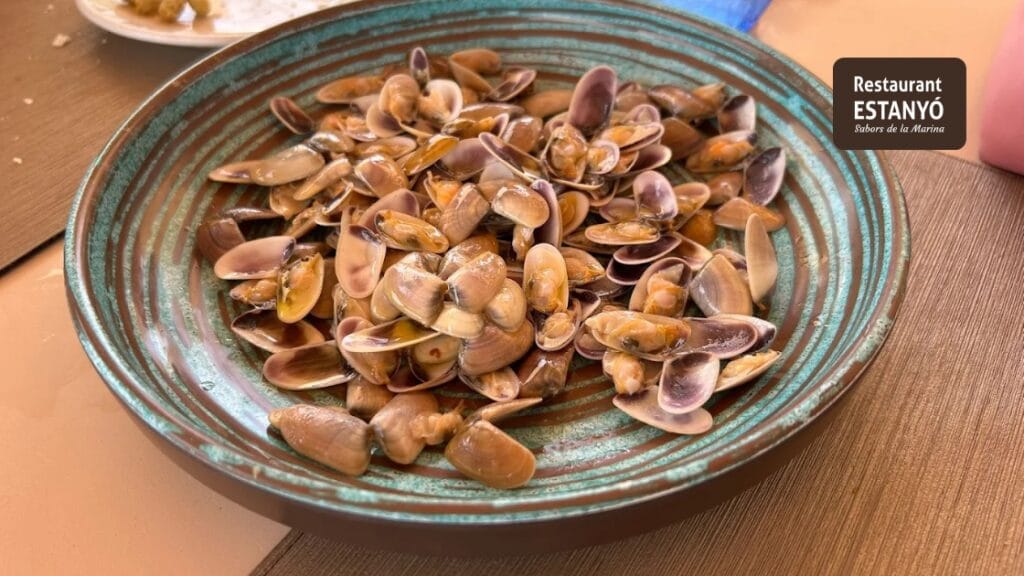
Among the Mediterranean’s little treasures, tellina clams stand out for their flavor and their close connection to coastal cuisine. Discover what they are, how to identify and store them, the best ways to cook them, and their role in Denia’s culinary tradition.
Mediterranean cuisine finds some of its most recognizable ingredients in seafood. Fish, crustaceans, and mollusks are part of a cuisine closely tied to the coast, where many dishes aim to preserve the natural flavor of the ingredients through simple preparation methods. Among these small seafood delicacies is a mollusk particularly associated with the sandy seabed along the coast.
Tellinas are notable for their small size, their elongated shell, and a flavor that allows them to be enjoyed with just a few accompaniments. In different regions, they’re also known by other names, such as “coquinas” or “xarletas,” which can cause some confusion when buying them or seeing them on a menu. Additionally, understanding their habitat helps explain why cleaning them thoroughly is especially important before cooking.
But there’s much more to a freshly prepared serving than meets the eye. In this article, we’ll explore exactly what these mollusks are, where they live, how to tell them apart, what to keep in mind when buying and storing them, and some of the most common ways to serve them.
What Are Tellinas?
Tellina are small bivalve mollusks that live on sandy coastal bottoms. One of the species associated with this name in Spain is Donax trunculus, belonging to the family Donacidae. As with other bivalves, their body is protected by two valves joined together, and they lack a distinct head like that found in other groups of mollusks.
Donax trunculus is found throughout the Mediterranean Sea and also in parts of the eastern Atlantic. It inhabits sandy beaches, especially in shallow areas exposed to wave action. Instead of remaining on the seafloor, it uses its muscular foot to burrow quickly into the sand. This ability allows it to remain within the sediment and move when water conditions change.
How Can We Identify a Tellina?
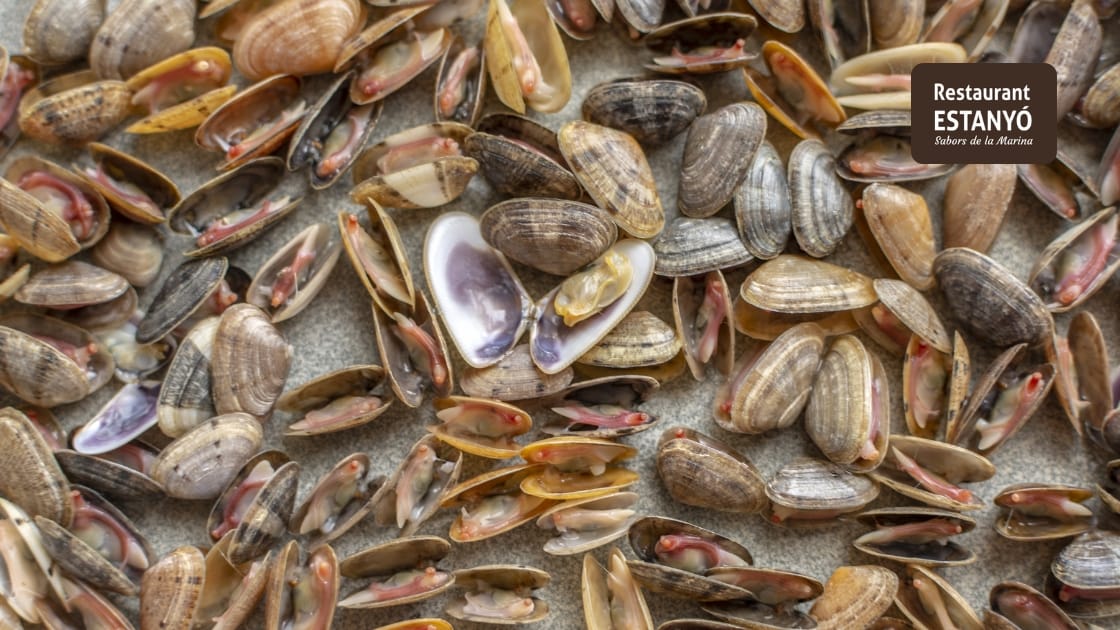
Its small size is one of its most obvious characteristics. The shell of Donax trunculus can reach about five centimeters, although smaller specimens are more common. It has an approximately triangular, elongated shape, with a smooth outer surface that may display various shades. Colors vary among specimens and include whitish, yellowish, brown, or purplish tones.
There is also a variety of colors on the inside. Some shells have white, orange, or violet hues. For this reason, color alone is not a sufficient criterion for identifying the species. The shape of the shell, its structure, and other morphological features are more useful for distinguishing it from similar bivalves.
Tellina, Coquina, and Tellerina: Are They the Same Thing?
Common names can be confusing because they vary by region. In Spain, Donax trunculus is known commercially as “coquina” in Spanish, while “tellina” is traditionally used in the Valencian Community. Therefore, two people may use different names to refer to the same mollusk.
This does not mean that every small bivalve called a tellina or coquina necessarily belongs to the species Donax trunculus. There are closely related species, including Donax semistriatus, that may be found under similar common names. Therefore, when it is important to identify the product exactly, the scientific name is much more precise than the common name.
Their way of life also explains an important characteristic from a culinary standpoint. Because they live buried in sandy bottoms, tellina clams may contain sand between their shells. For this reason, their origin, commercial purification, and proper preparation are particularly important before they reach the plate.
Season, Purchasing, and Storage
The availability of tellina clams does not depend solely on a specific culinary season. As they are a fishery resource, their harvest is subject to regulations and may be affected by closed seasons, authorized fishing zones, minimum size limits, the condition of natural beds, and health inspections. For this reason, it is not accurate to designate specific months as the “tellina season” for all of Spain.
In the Valencian Community, commercial bivalve fishing is regulated, and the authorities may impose temporary closures or bans when circumstances require it. In addition, mollusk production areas are subject to health inspections. Therefore, just because a shellfish is found on a beach does not mean it is safe to collect and consume.
What Should You Look for When Buying Tellinas?
Cockles must be purchased through authorized establishments and channels, such as the Denia Market. Live bivalve mollusks intended for consumers must be properly packaged and labeled so that their origin can be identified and the product’s traceability maintained. This information is much more reliable than assessing their safety based solely on appearance.
Even so, there are signs that indicate freshness. In live bivalves, the shells should be closed or close when lightly touched. You should discard any specimens with broken shells and watch for any unusual odors. If a tellina remains open and does not react when touched, it should not be used.
Purification and Sand Are Not the Same Thing
It is important to distinguish between two concepts that are often confused. Commercial purification is a sanitary process carried out by authorized facilities to reduce certain microorganisms present in mollusks from areas classified as requiring this treatment. It does not simply consist of removing sand.
At home, however, cleaning is primarily intended to remove external debris and reduce the possible presence of sand before cooking. This home procedure never replaces health inspections nor makes a mollusk collected in an unauthorized area safe.
How to Store Them Before Cooking Them
Clams are a highly perishable product and should be cooked as soon as possible. Until then, they should be kept refrigerated and stored according to the instructions on the package. It is also not recommended to leave them submerged in fresh water for hours: not only does this not replace professional purification, but improper conditions can cause the mollusk to die.
Finally, do not discard the label immediately after purchasing the product if you need to verify its origin or date. In the food service industry, traceability is even more important and is subject to specific requirements for retaining documentation related to bivalve mollusks.
How Do You Cook Tellinas?
Clams require very little preparation before being served. Their small size makes them ideal for quick cooking, while cooking them for too long can damage the texture of the meat. That’s why many recipes call for a hot skillet or saucepan and just a few ingredients. Olive oil, garlic, and parsley are a common combination, although there are also versions that include white wine or lemon.
Before you begin, you should inspect the clams and remove any that have broken shells or remain open and do not react when touched. You should also wash them to remove any debris stuck to the shells. If you have purchased them pre-packaged, always follow the storage and preparation instructions provided for the product.
Grilled Clams with Garlic
To cook them on the grill or in a skillet, first heat a small amount of oil. Then add the clams and keep them over the heat just long enough for the shells to open. It’s a quick process. Using a pan that’s large enough helps spread them out and prevents too many from piling up on top of each other.
Another option is tellinas with garlic. In this dish, the garlic is first sautéed in olive oil, and then the clams are added. Some recipes include white wine and finish the dish with chopped parsley. As they cook, the tellina clams release some of their own liquid, which mixes with the other ingredients and forms the broth that collects at the bottom of the pan.
The Boiling Point and the Clams That Won’t Open
Opening the clams makes it easy to monitor the cooking process. Once opened, they don’t need to stay on the heat much longer. Leaving them to cook unnecessarily can cause the meat to lose its juiciness and make it less enjoyable.
It is also important to note what happens to the specimens that remain completely closed. The standard food safety recommendation for bivalve mollusks is to discard any that do not open during cooking.
From Appetizer to Ingredient in Other Dishes
Although they are often served on their own as a tapa or small portion, their culinary possibilities don’t end there. Tellinas can also be added to rice dishes and other seafood preparations. In these cases, it’s important to keep their small size in mind and pay attention to when they’re added to avoid overcooking them.
When served as a single portion, however, the simple preparation allows you to better appreciate their qualities. Freshly made and served with their own cooking juices, they become a dish meant to be savored slowly and shared in the center of the table.
Its Role in Gastronomy
Tellina clams are part of the wide variety of seafood found in Mediterranean cuisine. In the Valencian Community, moreover, their very name reflects this regional connection: “tellina” is one of the names used for Donax trunculus, the small bivalve commonly known in Spanish as “coquina.” Their presence in the local cuisine is particularly noticeable in coastal towns, where they can be found as an appetizer, tapa, or small serving.
One of their culinary features is that they don’t require a complex preparation. Their size makes them ideal for quick cooking and allows for serving many of them on a single plate. As a result, tellinas fit well into a dining style based on placing different dishes in the center of the table and sharing them.
A Seafood Dish on the Tables of Denia
In Denia, Mediterranean ingredients play a prominent role in the local cuisine. The city’s culinary offerings combine fish and seafood with dishes deeply rooted in the region, such as rice dishes. Furthermore, since 2015, Denia has been a member of the UNESCO Creative Cities Network in the Gastronomy category, a recognition that highlights its culinary heritage and the relationship between cuisine, local products, and the region.
In this context, tellinas are a particularly good choice to start a meal or to serve alongside other appetizers. They do not necessarily have to serve as the main course. Their size makes them ideal for pairing with fish, other shellfish, seafood, or rice dishes as part of a seafood-themed meal.
Try the Tellinas at Junto al Mar
The presence of this product in coastal restaurants can be seen at Restaurant Estanyó. Located right on the beachfront in Les Marines de Denia, the restaurant includes tellinas in its selection of small plates. The same section of the menu features other seafood dishes, such as grilled cuttlefish, assorted fried fish, fried shrimp and baby shrimp, cod fritters, and fresh-caught squid.
The tellinas are thus part of a broader menu based on Mediterranean and seafood cuisine. As part of its “Sabors de la Marina” menu, Restaurant Estanyó also offers rice dishes, fideuàs, and fresh seafood and fish from the Denia Fish Market. In this way, a serving of tellinas can be the perfect start to a meal featuring a variety of flavors inspired by the Mediterranean and the region’s local cuisine.
Savour the Flavors of the Mediterranean at Restaurant Estanyó
Now that you know more about tellinas, their characteristics, and the different ways to serve them, all that’s left is to enjoy this little mollusk in a setting that does it justice. At Restaurant Estanyó, you can try a serving of tellinas overlooking the Mediterranean and make it the start of a meal dedicated to the flavors of the coast.
This family-run restaurant has been sharing its passion for gastronomy right on the beachfront in Les Marines de Denia since 1996. Mari, in the kitchen, and José, in the dining room, lead the way with a menu centered on seafood and Mediterranean cuisine. Under the “Sabors de la Marina” philosophy, their menu features rice dishes, tapas, seafood, fideuà, and fresh fish, in addition to the tellinas we’ve highlighted throughout this article.
If you’d like to enjoy a meal by the sea and discover the diverse flavors of Denia’s cuisine, book your table online at Restaurant Estanyó. The Mediterranean sets the scene; all you have to do is choose where to start.