
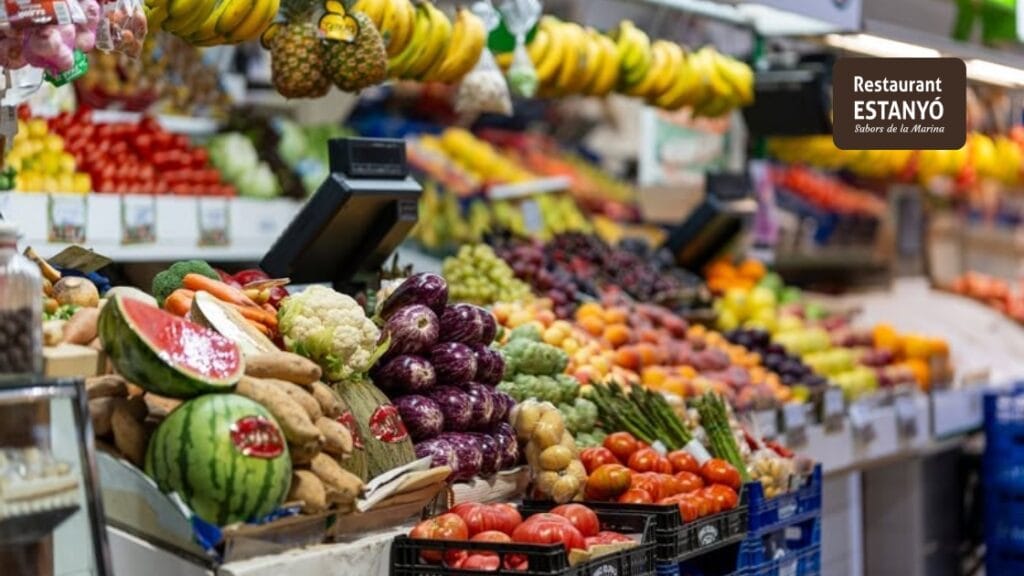
The Denia Market combines history, traditional commerce, and some of the city’s best fresh produce. Discover how it has evolved, what you can find at its stalls, and why it remains a cornerstone of the local culinary scene.
There are places that help you understand the essence of a city much better than any monument. In Denia, one of them is the Municipal Market. For decades, merchants, local producers, fishermen, chefs, and residents have shared its aisles. Together, they keep alive a model of consumption based on proximity, quality, and knowledge of the product. More than just a place to shop, it reflects the culinary identity of the capital of the Marina Alta.
Its location right in the heart of the historic center and the wide variety of fresh foods it offers make it a highly recommended stop for anyone who wants to discover local cuisine at its source. There, you can find fish and seafood fresh from the fish market, seasonal fruits and vegetables, meats, cured meats, salted fish, and other products that are part of the most traditional Mediterranean cuisine.
Understanding this market also helps explain why Denia has established itself as one of the Mediterranean’s leading culinary destinations. In this article, we’ll explore its history, the products that make it special, and the important role it plays in the cuisine of many of the city’s restaurants.
The History of the Denia Market and Its Evolution to the Present Day
From the City’s Squares to the Current Building
Before it had its own building, the food market was located in various public spaces in downtown Denia. The current Plaza de la Constitució served as the market’s location during its early years. Later, in 1876, the stalls were moved to what was then known as Plaza del Mercado, now Glorieta del País Valencià.
At the Glorieta, sales took place in temporary booths and structures covered with awnings. The stalls stretched from the Els Quatre Cantons area to Pare Pere Street. This model made it possible to concentrate commercial activity, although it did not provide the permanent facilities required by a growing population.
The definitive change came on May 31, 1955. On that day , the current Municipal Market, located on Magallanes Street, opened its doors. Market activity moved from the Glorieta to a building designed specifically for the sale of food. The inauguration was presided over by the mayor at the time, Antonio Muñoz, and was attended by a large number of local residents.
Seventy Years in Business
Since its opening, the Municipal Market has retained its primary function: to bring together under one roof various establishments engaged in the retail sale of food and other products. Furthermore, it is considered a municipal public service. For this reason, the City Council is responsible for its administrative oversight and for ensuring free competition among vendors.
The building currently features air conditioning, accessible entrances, restrooms for customers, and a bar and café area. New services have been added to these facilities. In 2025, for example, refrigerated lockers were installed in the fish section so that customers could pick up their purchases outside the stalls’ regular hours.
That same year, the market celebrated its 70th anniversary with a program that included a multimedia presentation featuring old photographs and testimonials from vendors. Promotions, cooking demonstrations, and the first edition of the Figatell Fest were also organized. These initiatives show how the market combines its daily commercial activity with events designed to showcase the products and trades associated with Denia’s culinary traditions.
What Makes It Special: Products, Crafts, and Tradition
An Offering Based on Fresh, Locally Sourced Produce
The Denia Municipal Market brings together a wide variety of specialty shops that share a common goal: to offer fresh products through direct, personalized service. Among its stalls, you’ll find fishmongers, fruit stands, butchers, delis, bakeries, cured meat shops, florists, cafés, and other food-related businesses. This diversity allows you to find, all in one place, many of the ingredients that are part of the Mediterranean cuisine of the Marina Alta.
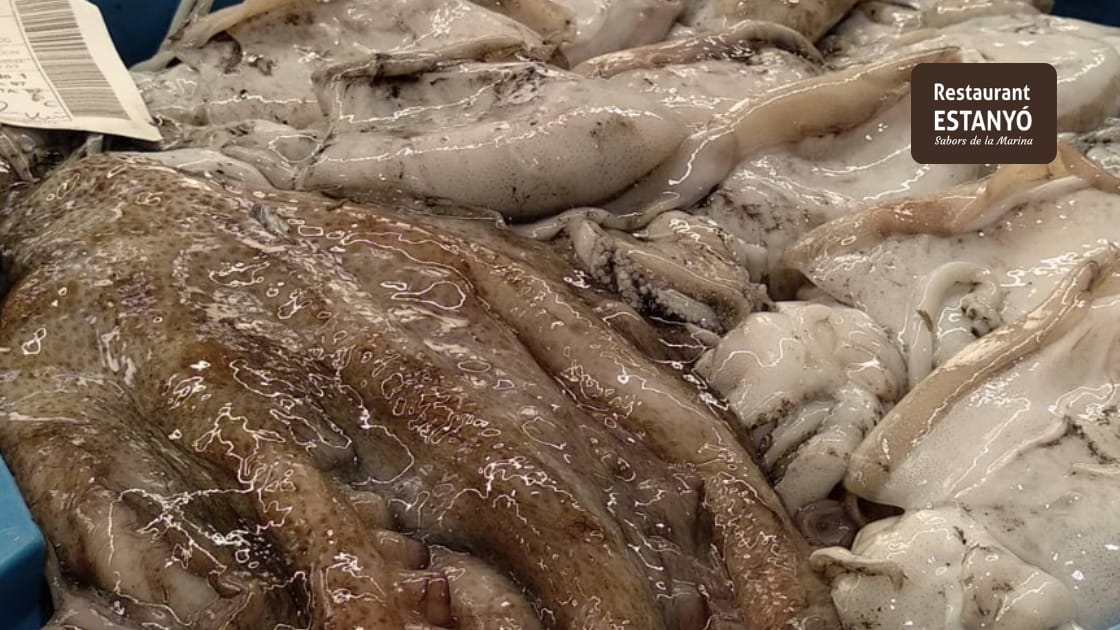
One of the market’s biggest draws is the fish and seafood from the Denia Fish Market. The proximity between the fishing port and the market ensures that many species reach the counters just a few hours after being unloaded. Depending on the time of year, you can find signature products such as Denia’s red shrimp, as well as various types of rockfish, cuttlefish, octopus, and shellfish—always depending on the season and the catches made by the local fleet.
The Value of Shopping at a Traditional Market
In addition to the products themselves, the market preserves a way of shopping that is becoming increasingly rare. Many merchants know the origin of the food they sell. And they can advise customers on the best time to eat it, how to prepare it, or the characteristics of each variety. That advice is part of the experience. It is one of the features that sets specialty shops apart from other distribution models.
The Municipal Market also promotes initiatives to highlight local products. Over the past few years, it has organized campaigns dedicated to figatell, Denia’s red shrimp, and seasonal fruits and vegetables. It also hosts culinary demonstrations and educational activities that introduce these foods to both residents and visitors. These initiatives reinforce the market’s role as a showcase for local cuisine and help keep the connection between producers, merchants, and consumers alive.
How the Market Is Part of Denia’s Culinary Scene
A Key Component of the City’s Culinary Scene
Talking about Denia’s cuisine means looking beyond its restaurants. The Municipal Market is part of a chain that begins at the sea and in the vegetable gardens. It continues with producers and specialty vendors. And it ends in the city’s kitchens.
This model, based on local produce and seasonality, has helped Denia earn recognition as a UNESCO Creative City of Gastronomy since 2015. This recognition does not merely highlight the quality of its dishes; it also highlights the collaborative efforts of fishermen, farmers, markets, food companies, training centers, and hospitality establishments.
In this context, the market plays an essential role. It brings fresh food to consumers. And it serves as a link between those who produce the ingredients and those who later transform them into culinary creations. This direct relationship fosters an understanding of the product and helps keep many traditional recipes from the Marina Alta alive.
Seasonality Continues to Shape Local Cuisine
One of the defining characteristics of Denia’s cuisine is its respect for the natural calendar. The availability of a wide variety of fish, shellfish, fruits, and vegetables changes throughout the year. As a result, both market vendors and many restaurants adapt their offerings to each season. This approach allows them to make the most of each product at its peak and preserve traditional recipes that are part of the local culinary heritage.
Specialties such as arroz a banda, suquet, llandeta, dried octopus, and traditional cocas stem precisely from that close relationship between the region and the ingredients available at each time of year. The Municipal Market helps maintain that connection by offering a wide selection of fresh produce every day that reflects the region’s rich agricultural and fishing heritage. That’s why strolling through its stalls also means discovering an important part of the culinary culture that has brought Denia prestige both within and outside of Spain.
From Market to Table: The Philosophy of Fresh Produce
The Quality of a Dish Begins Long Before It’s Cooked
As you’ve seen, a visit to the Denia Municipal Market offers insight into a reality that often goes unnoticed: the success of Mediterranean cuisine doesn’t depend solely on technique; the quality of the ingredients also plays a key role.
Choosing fish at its peak, respecting the season for each type of seafood, and cooking with freshly harvested vegetables directly influence the final result of any dish. For this reason, many restaurants in the city base their culinary offerings on fresh ingredients and adapt part of their menu to the daily availability of produce.
This philosophy explains, for example, why certain species are not available year-round. Or why some fish are sold by weight rather than in standardized portions. It is an approach that prioritizes the product and allows us to make the most of each ingredient when it is at its best.
A Cuisine That Reflects Denia’s Culinary Tradition
Restaurant Estanyó shares this approach to Mediterranean cuisine. Its menu features numerous dishes rooted in the seafaring traditions of Denia and the Marina Alta. These dishes are prepared with ingredients found daily at the Municipal Market and the Fish Market.
Among its appetizers, highlights include specialties such as dried octopus, tellina clams, fresh-from-the-market squid, and grilled cuttlefish. Meanwhile, rice dishes and fideuà continue to take center stage thanks to offerings such as arroz a banda, arroz del senyoret, seafood paella, llandeta with fish and seafood, and suquet with sea bass, monkfish, and clams.
This commitment to the product is also evident in the selection of fish. Species such as red seabream, grouper, sea bream, San Pedro scorpionfish, and scorpionfish are served by the kilogram and can be grilled, baked, baked in salt, or fried, depending on the type of fish. More than just a culinary decision, this approach reflects a philosophy of gastronomy in which the ingredient takes center stage.
That’s why, after visiting the Municipal Market, it’s well worth discovering how all that culinary tradition comes to life at Restaurant Estanyó. Its rice dishes, fresh fish from the Denia Fish Market, seafood, and seafood recipes all highlight local ingredients. This way, you can enjoy the authentic culinary essence that sets this town apart in the Mediterranean.
Enjoy the Finest Ingredients at Restaurant Estanyó
The Denia Municipal Market is much more than just a place to buy food. Its history, the variety of its products, and its relationships with farmers, fishermen, merchants, and restaurant owners make it an essential part of the city’s culinary identity. A stroll through its stalls allows you to discover the origins of many of the ingredients that have made Denia’s cuisine famous—and to understand why fresh produce remains the true star of the show today.
If you want to round out that experience, Restaurant Estanyó is the perfect place to enjoy that same philosophy at the table. Since 1996, José and Mari have turned this family-run restaurant into a leader in Mediterranean cuisine. They specialize in rice dishes, fideuà, tapas, and fresh seafood from the Denia Fish Market, all prepared with the utmost respect for the ingredients. All of this takes place in a stunning setting, right on the water and directly on Les Marines Beach.
Reserve your table at Restaurant Estanyó and discover how the finest Mediterranean ingredients are transformed into dishes that honor Denia’s culinary tradition. Because great memories don’t always begin at a monument or a beach. Sometimes they take shape around a table where the ingredients are the true stars.