
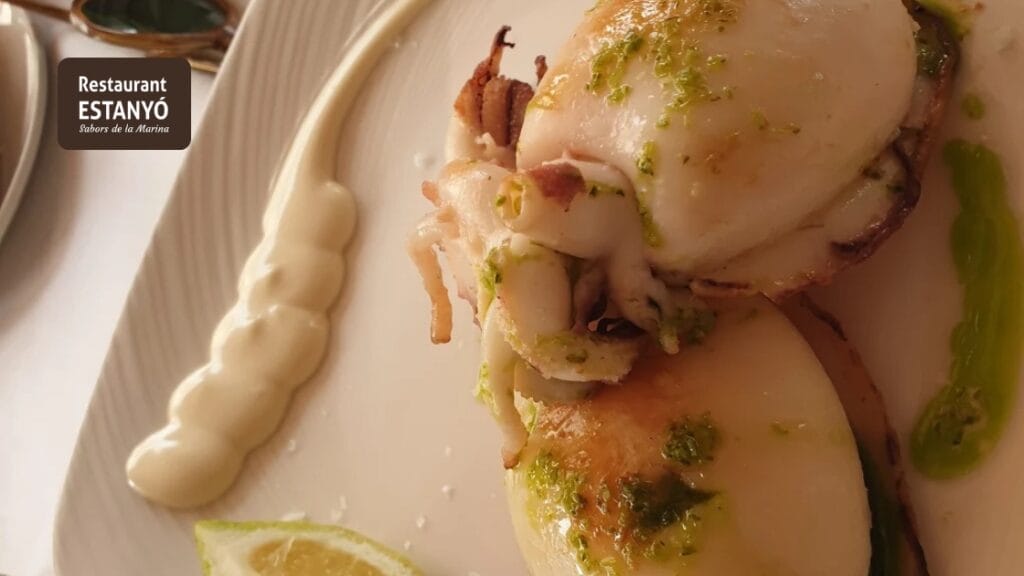
Grilled cuttlefish can turn out tender, golden, and flavorful if you pay close attention to its preparation and cooking. Discover how to cook it properly, what mistakes to avoid, the seasonings and side dishes that pair best with it, and its role in Denia’s seafood cuisine.
Among the seafood products that are part of Mediterranean cuisine, cuttlefish stands out for its mild flavor, distinctive texture, and the many possibilities it offers in the kitchen. It can be used in rice dishes, stews, and other preparations, although cooking it on a hot surface allows you to enjoy it with just a few ingredients and lets the product itself take center stage.
However, achieving a tender texture and a nice golden color requires paying attention to several details. Cleanliness, the moisture content before cooking, the griddle temperature, and the cooking time all directly affect the result. These are simple but important factors.
In this article, we’ll learn more about this cephalopod, see how to prepare it, and review the mistakes to avoid when cooking it. We’ll also discover some suitable seasonings and side dishes and explore their connection to the seafood cuisine of Denia, where Mediterranean ingredients play a prominent role.
What Is Cuttlefish, and Why Is It So Highly Valued?
The cuttlefish is a cephalopod mollusk, meaning it belongs to the same group as squid and octopuses. One of the species found in the Mediterranean is Sepia officinalis, commonly known as the common cuttlefish. Its body has an oval, flattened mantle, eight arms, and two longer tentacles that it uses to capture its prey. Inside is the cuttlebone, a rigid calcareous structure that clearly distinguishes it from squid.
Cuttlefish, Squid, and Octopus: They’re Not the Same Thing
Although all three are cephalopods, there are easily recognizable differences. The cuttlefish has the characteristic internal cuttlebone and a wider, flatter body. The squid has a longer mantle and features a flexible internal structure known as a pluma. The octopus, on the other hand, has eight arms and lacks the two additional tentacles found in cuttlefish and squid.
In cooking, the cuttlefish’s mantle and tentacles are the main parts used. Its ink can also be used; it contains dark pigments and adds color and flavor to various dishes. For this reason, the culinary uses of this cephalopod go far beyond simply grilling its meat.
Fresh or Frozen Cuttlefish?
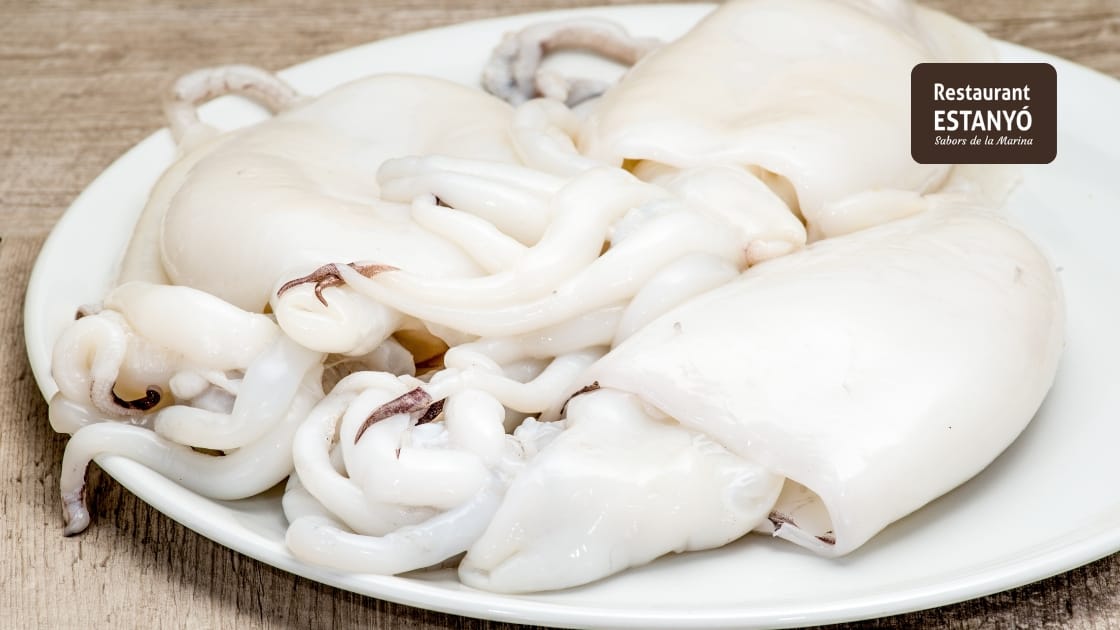
Both options can be suitable. When buying fresh cuttlefish , be sure to check that it looks fresh, has firm flesh, and has a mild, ocean-like smell—never an unpleasant one. Also, if you buy it whole, you’ll need to remove the innards when cleaning it. If you buy it already cleaned, it significantly reduces the amount of prep work you’ll have to do at home.
Frozen cuttlefish is another option and should not automatically be considered a lower-quality product. The key is to maintain the cold chain properly and thaw it correctly. The Spanish Agency for Food Safety and Nutrition recommends thawing cuttlefish in the refrigerator and preventing the food from coming into contact with the liquids it releases during the process.
Food Safety Tips
In addition, there is a food safety issue worth noting. Anisakis can also be found in cephalopods such as cuttlefish. When cooked properly, heat treatment destroys the parasite; AESAN specifies that the entire piece must reach at least 60 °C for one minute. For this reason, prior freezing is necessary when the product is to be consumed raw or prepared in ways that do not provide sufficient heat treatment.
How to Make Tender and Tasty Grilled Cuttlefish
Getting tender, lightly browned cuttlefish depends largely on how it’s prepared for the grill. If you buy it whole, you must first remove the innards, the cuttlebone (the internal bone), the eyes, and the mouth, as well as separate the ink sac if you want to use it. Many fishmongers sell cuttlefish that’s already cleaned, which simplifies this process considerably.
Preparing Cuttlefish Before Cooking It
After cleaning it, one of the most important steps is to remove excess moisture. It’s best to drain it and pat the surface dry thoroughly with paper towels. If it’s wet when it hits the griddle, the water absorbs some of the heat and makes it harder for the surface to brown. Instead, liquid may accumulate in the pan, and the cuttlefish will end up cooking in it.
You also need to decide how to cut it. The body can be cooked whole or cut into pieces of a certain size, while the tentacles can be prepared alongside it. Smaller pieces cook more quickly and have more surface area exposed to the heat, so they require special attention to prevent them from drying out.
High Temperature and Short Cooking Time
Before adding the cuttlefish, the griddle or skillet should be very hot. You can use a small amount of olive oil, and if there is a large amount of cuttlefish, it’s best to cook it in several batches. Piling the pieces on top of each other quickly lowers the surface temperature and causes water to accumulate.
Once on the griddle, cooking should be relatively quick. There is no single cooking time that applies to all pieces: a small or cut cuttlefish requires less time than a thick piece. As a visual guide, the outside loses its translucent appearance and develops golden brown spots. Additionally, for food safety, the entire piece must reach at least 60 °C for one minute.
Why Might It Become Hard?
Overcooking is one of the main problems when preparing grilled cuttlefish. Cephalopods respond well to both brief cooking at high temperatures and the prolonged cooking typical of certain stews, but unnecessarily prolonging a quick preparation can result in a tough texture.
Therefore, cooking it for longer won’t fix a cuttlefish that’s starting to toughen up. When grilling, it’s important to control three factors: low surface moisture, high temperature, and a cooking time appropriate for the thickness. If you also avoid overcrowding the pan, it will be much easier to achieve a golden brown exterior without turning the grilling process into steaming the cuttlefish in its own juices.
Common Dressings and Side Dishes
Grilled cuttlefish pairs well with a variety of side dishes, though it doesn’t require complicated preparation to bring out its flavor. In fact, one of the most common seasonings consists solely of garlic, parsley, and olive oil. These ingredients complement the cephalopod’s natural flavor without overpowering it, and allow you to prepare the dish using ingredients commonly found in Mediterranean cuisine.
Garlic, Parsley, and Olive Oil
To prepare this dressing, simply finely chop garlic and fresh parsley and mix them with olive oil. You can also crush them in a mortar. However, both the combination of ingredients and the timing of when to add them are important. Garlic can burn quickly on a very hot griddle and develop a bitter taste, so one option is to add the dressing when the cuttlefish is almost done cooking and give it a brief final sauté.
Another option is to set aside some of the sauce to add it once the cuttlefish has been removed from the heat. Lemon is also commonly used, but it’s best to serve it on the side or add a few drops at the end. That way, each diner can adjust the acidity, and we prevent it from overpowering the flavor of the cuttlefish.
What Should You Serve with Cuttlefish?
If we want to make this a more complete meal, potatoes offer numerous possibilities. They can be served boiled, roasted, or lightly browned, while a salad provides a fresher side dish. Lettuce, tomatoes, and other vegetables make for a simple side dish that doesn’t overshadow the main ingredient.
Aioli is another common pairing with cuttlefish. In this case, it’s best to use it sparingly, since the garlic and the sauce’s texture have a strong presence. Serving it on the side allows you to use it as an accompaniment while letting the cuttlefish take center stage.
From Appetizer to Main Course
The way it’s served can be easily adapted to any occasion. Cut into small pieces, it works well as a tapa or appetizer to share. If cooked whole or in large pieces, served with potatoes or a salad, it can become the main course.
It is also possibleto make shallow diamond-shaped cuts in the mantle before grilling it. In addition to changing its appearance, these cuts increase the surface area directly exposed to the heat. The tentacles don’t have to be discarded either: once cleaned, they can be grilled along with the mantle.
In any of these preparations, it is best to serve the cuttlefish immediately after cooking. This way, it arrives at the table hot and freshly browned, while the seasoning and side dishes serve as accompaniments without turning a simple dish into something unnecessarily elaborate.
Cuttlefish in Denia’s Seafood Cuisine
Denia’s connection to the Mediterranean is directly reflected in its cuisine. Fish, shellfish, and cephalopods are all part of a culinary tradition in which seafood plays a prominent role. Among these are cuttlefish, squid, and octopus—ingredients that lend themselves to everything from simple grilled dishes to more elaborate recipes.
This culinary connection has also earned international recognition. Since 2015, Denia has been part of UNESCO’s Creative Cities Network in the Gastronomy category, a distinction related not only to its dishes but also to its culinary heritage, local produce, and the transmission of culinary knowledge.
From the Denia Fish Market to the Restaurants
A significant part of this connection to the sea can be seen right in the port itself. From Monday through Friday—except during the fishing moratorium— fishing boats return in the afternoon and unload their catch at the Denia Fish Market. That is where the professional auction takes place, through which the fish is distributed to restaurants and food companies.
The variety goes far beyond a few particularly well-known products, such as Denia’s red shrimp. At the fish market, you can find a variety of fish as well as cephalopods such as cuttlefish, squid, and octopus. This diversity helps explain why the local seafood cuisine isn’t limited to just one recipe. Rice dishes, fideuà, tapas, fish, and grilled dishes offer different ways to enjoy the bounty of the Mediterranean.
Tastes of the Navy
This connection between local produce and the region is also evident in the city’s restaurants. Restaurant Estanyó embodies this connection through its “Sabors de la Marina” concept, featuring a menu centered on Mediterranean and seafood cuisine. Its menu includes rice dishes, fideuà, shellfish, fish, and a variety of tapas made with seafood.
Grilled cuttlefish itself is now part of their menu. Alongside it are items such as tellina clams, dried octopus, fresh squid from the fish market, and grilled baby squid. In addition, the restaurant sources fresh fish from the Denia Fish Market. This approach brings to the table the connection between the Mediterranean, seafood, and a cuisine in which ingredients from the sea take center stage.
Enjoy Mediterranean Cuisine Right on the Waterfront
Preparing a delicious grilled cuttlefish proves that complex preparations aren’t necessary when the ingredients and technique take center stage. And if you want to enjoy the flavors of the Mediterranean without having to stand over a stove, Restaurant Estanyó welcomes you to a setting that’s inseparable from its cuisine: the coast of Denia itself.
José and Mari have been running this family-owned restaurant since 1996—Mari in the kitchen and José in the dining room. Their restaurant is located right on the beachfront in Les Marines, at Lago de Sanabria No. 6, Carretera de Les Marines, km 6.5. This location allows guests to dine with the Mediterranean as their backdrop and enjoy a menu featuring rice dishes, tapas, seafood, fideuà, and fish.
You can come for lunch on Mondays, Wednesdays, and Sundays from 1:00 p.m. to 5:30 p.m., and on Thursdays, Fridays, and Saturdays from 1:00 p.m. to 5:30 p.m. and from 8:00 p.m. to 11:00 p.m. It is closed on Tuesdays but open on holidays and the days before holidays. To plan your visit, you can reserve a table online or contact Restaurant Estanyó at 966 474 242. Choose your day, make a reservation, and come enjoy authentic Mediterranean cuisine right by the sea.