
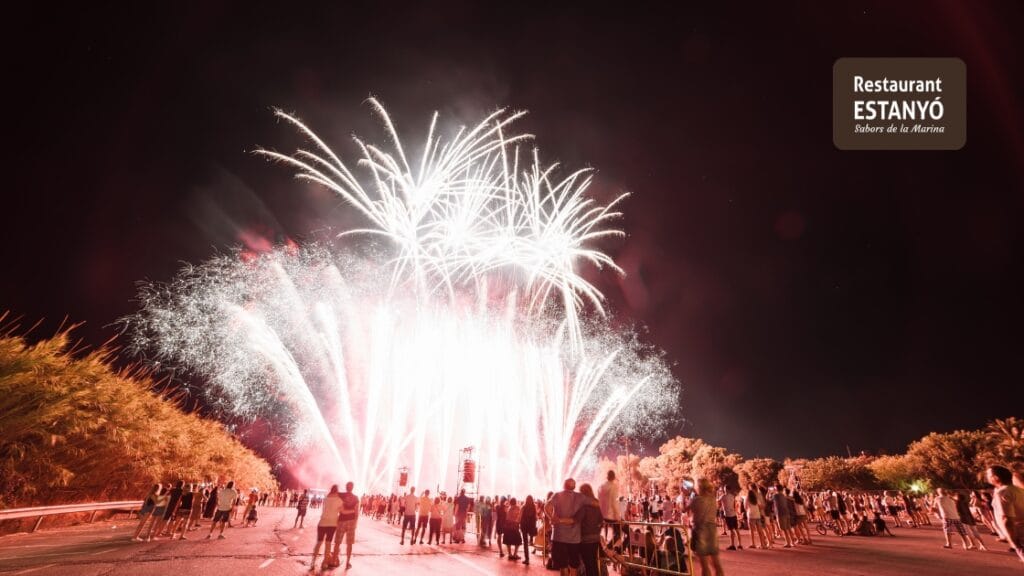
Denia’s festivals bring together some of the city’s most representative traditions, including the Fallas, the Fiestas Mayores, the Moors and Christians, and various popular celebrations that offer a glimpse into its history, culture, and Mediterranean character.
Festive life is part of the essence of Denia. Throughout the year, the city is transformed on numerous occasions to celebrate traditions that combine history, popular culture, music, and community participation. Some of these celebrations date back centuries, while others have evolved over time to become major tourist attractions capable of drawing thousands of visitors.
Dian’s festival calendar stands out for its variety. It ranges from spectacular parades to events related to the sea, as well as religious celebrations, culinary events, and neighborhood festivals. Every season of the year offers a different opportunity to experience the local culture. In addition, many of these festivities allow visitors to discover traditions that have been passed down from generation to generation and remain very much a part of daily life in the city.
Denia’s festivals are one of the best examples of this cultural richness. Experiencing them helps one better understand the open-minded nature of its residents, their close connection to the Mediterranean, and the role that traditions continue to play in a city that has managed to preserve much of its festive heritage.
Denia’s Fallas, The Great March Festival
The Fallas are one of the most important celebrations on Denia’s festival calendar. The city has eleven Fallas committees spread across different neighborhoods. They are responsible for organizing activities throughout the year and for erecting the monuments that take center stage during the festival every March. Although they share their origins with the Fallas of Valencia, Denia’s celebrations have developed a personality of their own and are part of the city’s cultural heritage.
During the festival’s peak days, the streets come alive with music, fireworks, and traditional events that draw both Fallas participants and visitors. The official program is concentrated mainly between March 15 and 19, when the festive atmosphere reaches its peak.
Falla Monuments and Handicrafts
One of the highlights of the Fallas in Denia is the Fallas monuments. Each committee erects one large Fallas monument and one children’s Fallas monument, crafted by specialized artists who spend months designing and building them. These compositions typically combine satire, social criticism, current political issues, and references to local themes.
The “plantà” marks the moment when the monuments are fully installed in the streets. From that point on, a jury evaluates various aspects—such as artistic quality, originality, and technical execution—to award the prizes in each category.
Exploring the different Fallas districts allows you to appreciate a wide variety of styles and experience firsthand a tradition that combines ephemeral art, collective effort, and community participation.
Traditional Events and Street Atmosphere
The Fallas festivities include numerous events that take place from early in the morning until the wee hours of the morning. The “despertàs” herald the start of the day with firecrackers and parades. This is followed by official visits between committees, children’s activities, musical performances, and nighttime street parties.
Fireworks play a prominent role throughout the celebration. Fireworks displays are an integral part of the Fallas’ identity and attract large crowds every year. Similarly, traditional Valencian attire is a constant presence thanks to the falleras mayores, the courts of honor, and the representatives of each commission.
La Cremà, The End of the Festival
The night of March 19 culminates with the cremà, the most symbolic event of the Fallas. After several days of celebration, the monuments are consumed by fire, following a tradition that marks the end of one cycle and the beginning of the next.
The children’s fallas are burned first, followed by the large fallas. This final spectacle marks the end of a festival that, every year, makes Denia one of the main highlights of the Valencian Community during the month of March.
Denia’s Main Festivals: Tradition, Culture, and Devotion
Denia’s Fiestas Mayores are held every July in honor of the Santíssima Sang, the city’s patron saint. They are the municipality’s most popular festival and feature a wide-ranging program over several days that combines religious ceremonies, community activities, musical performances, and traditional events deeply rooted in local history.
The celebration has its origins in the devotion to the Santíssima Sang, whose image is housed in the Church of the Assumption. Over time, the festivities have evolved into one of the most important events of the year for residents and visitors alike.
Bous a la Mar, The Most Iconic Event
The most famous event of the festivities is, without a doubt, Bous a la Mar. This celebration takes place in an enclosure set up next to the harbor and involves the release of bulls, which are then herded by participants to a platform located over the water. The most iconic moment occurs when the bulls or runners end up falling into the sea, from where the bulls are later retrieved by boats.
Bous a la Mar has been designated a Festival of National Tourist Interest and is one of Denia’s main festive symbols. Its unique location on the Mediterranean coast sets it apart from other bullfighting festivals held in various Spanish towns.
Religious Ceremonies and Folk Traditions
The religious aspect continues to play an important role in the festivities. Among the highlights are the solemn Masses and the procession in honor of the Santíssima Sang, which winds through various streets in the historic center with the participation of officials, festival representatives, and numerous residents.
Alongside these events, there areparades, children’s activities, contests, cultural performances, and activities aimed at audiences of all ages. Many of these take place in different neighborhoods and squares, helping to spread the festive atmosphere throughout the city.
Concerts, Shows, and Street Life
During the Fiestas Mayores, Denia organizes free concerts, musical performances, and outdoor shows that attract thousands of people. The events are usually held in venues such as Calle La Vía or various areas of the city center that have been set up for large events.
The combination of religious tradition, popular activities, music, and celebrations along the harbor makes these festivities one of the best times to experience Denia’s social and cultural life firsthand.
Moors and Christians in Denia: History Turned into a Spectacle
The Moors and Christians Festival in Denia is held during the month of August and is dedicated to Sant Roc. This festival commemorates the historic conflicts between Muslims and Christians, which shaped much of the medieval history of the Iberian Peninsula. In a city like Denia, which was part of the important Taifa of Denia during the 11th century, this celebration takes on special significance due to its close connection to the local past.
The event is organized by the Association of Moors and Christians of Denia. It is made up of numerous groups that work year-round to prepare the events, costumes, and festival program.
Gala Parades and Festive Splendor
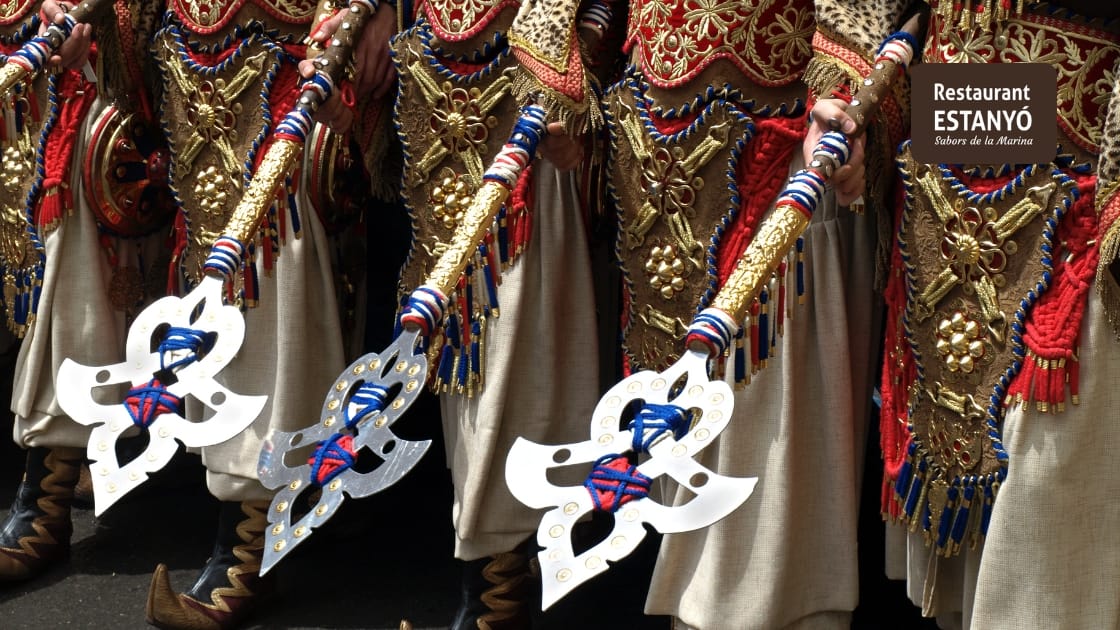
One of the most eagerly anticipated moments is the gala parades. Over the course of several days, the Moorish and Christian processions wind their way through the main streets of downtown, accompanied by marching bands, squads, ballet troupes, and decorative elements that add a spectacular touch to the parade route.
Participants wear elaborate costumes inspired by medieval and Al-Andalus aesthetics. Many of them feature embroidery, metalwork, capes, armor, and accessories made specifically for the occasion. This meticulous staging makes the parades one of the most photographed events of the summer in Denia.
The Moorish Invasion and the Christian Reconquista
The festival’s most distinctive event takes place in the harbor area. The Moorish Landing symbolically reenacts the arrival of Muslim troops in the city through a performance that makes use of the natural setting of the Port of Denia. The proximity of the sea lends the event a unique character that is hard to find in other similar celebrations.
Following the symbolic conquest by the Moorish side, the festivities continue with various processions and reenactments that depict the clash between the two armies. Finally, the Christian Reconquista reenacts the recapture of the city through speeches and festive events that attract large crowds.
A Festival Tied to Denia’s Heritage
The combination of history, music, tradition, and community participation has made the Moors and Christians Festival one of the most important events of the summer in Denia. In addition, many of the events take place in iconic locations such as the port, the historic center, or the area surrounding Denia Castle, reinforcing the connection between the celebration and the city’s historical heritage.
Other Celebrations and Popular Events Throughout the Year
Although the Fallas, the Fiestas Mayores, and the Moors and Christians attract much of the attention, Denia’s festival calendar includes numerous celebrations that reflect the cultural diversity and traditions of its various neighborhoods. Many of these celebrations have strong ties to the city’s seafaring history and to folk customs passed down through generations.
Sant Pere Festival and Seafaring Traditions
The festivities in honor of Sant Pere are held in late June in the Baix la Mar neighborhood, one of Denia’s most distinctive areas. Sant Pere is the patron saint of fishermen, so this festival is closely linked to fishing—an activity that has shaped the town’s economic and social life for centuries.
Among the highlights are religious celebrations, parades, community activities, and the traditional maritime procession. During this procession, the statue of the saint is carried through the harbor on decorated boats, creating one of the most iconic scenes of the local festival calendar.
Sant Roc Festival and Neighborhood Celebrations
The month of August also features the festivities dedicated to Sant Roc, which are closely tied to the city’s historic center. These celebrations combine religious ceremonies, children’s activities, music, and popular events aimed at both residents and visitors.
The festival calendar also includes celebrations centered on gastronomy and local produce. Among these, the Denia Red Shrimp International Creative Cooking Contest stands out—an event that strengthens the bond between the city and one of the most iconic ingredients of its cuisine.
Christmas, Three Kings Day, and Seasonal Events
Throughout December and January, Denia hosts a special program of events that includes Christmas markets, cultural activities, concerts, and activities for children. One of the most eagerly anticipated events is the Three Kings Parade, which winds its way through the city’s main streets every January 5.
The annual calendar is rounded out by themed fairs and cultural celebrations that take place throughout the different seasons. One example is the All Saints’ Fair, which is traditionally held at the Torrecremada fairgrounds and features attractions and stalls for several weeks in the fall.
Thanks to this variety, practically any time of year offers the chance to experience a festival that allows you to discover a different side of Denia.
Enjoy Denia’s Festivals and Cuisine
Denia’s festivals offer much more than just popular celebrations. They serve as a gateway to the city’s history, its seafaring traditions, the involvement of its residents, and a Mediterranean culture that remains very much alive in every neighborhood, square, and corner of the municipality. From the Fallas to the Moors and Christians, including the Fiestas Mayores and celebrations tied to the sea, each event showcases a different facet of Denia’s identity.
And after soaking up the festive atmosphere, strolling through the decorated streets, or enjoying the most iconic events, few experiences better capture the local spirit than sitting by the Mediterranean and savoring the cuisine that has made Denia so famous.
Restaurant Estanyó, located right on the beachfront in Les Marines, has been serving Mediterranean cuisine inspired by the flavors of the Marina Alta since 1996. José and Mari continue to run this family-owned business, which is known for its fresh fish from the Denia Fish Market, rice dishes, fideuàs, seafood, and specialties such as arroz a banda, seafood paella, fideuà with baby squid and shrimp, and grilled red shrimp.
Its prime location by the sea, its family-friendly atmosphere, and a menu deeply rooted in local ingredients make every meal a perfect extension of the city’s experience. Because some memories end when the party is over. Others linger long afterward, thanks to the unforgettable flavor of a delicious rice dish enjoyed overlooking the Mediterranean.